

To get a handle on the buzz words used when chatting about Machine Learning a subset of Artificial Intelligence which focuses on the ability of machines to receive a set of data and learn for themselves from data they are processing, here is a simple non-technical explanation for the common Machine Learning concepts with examples of applications.
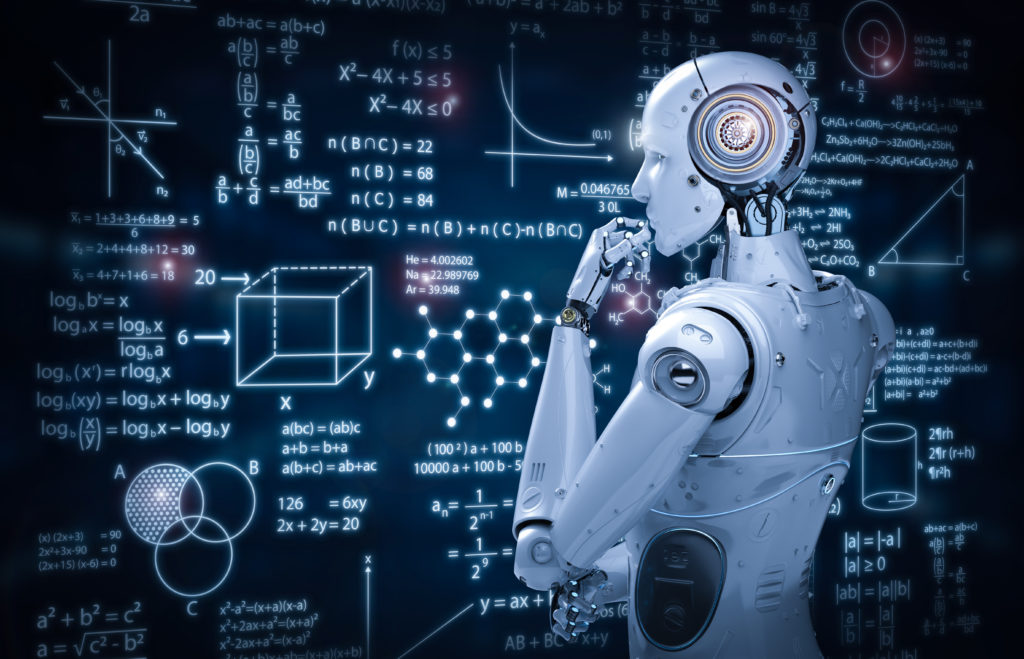
Machine Learning is not an intelligent robot that solves mathematical equations on a glass board as on the cover image! – Image credit
Broadly, Machine Learning can be sub-categorized into 4 types:
1 — Supervised Learning
Given a set of labeled observations, find a function f which can be used to assign a class or value to unseen observations.
In supervised learning, we compare real labels with predicted labels. Predictions should be similar to real labels.
1.1 — Classification
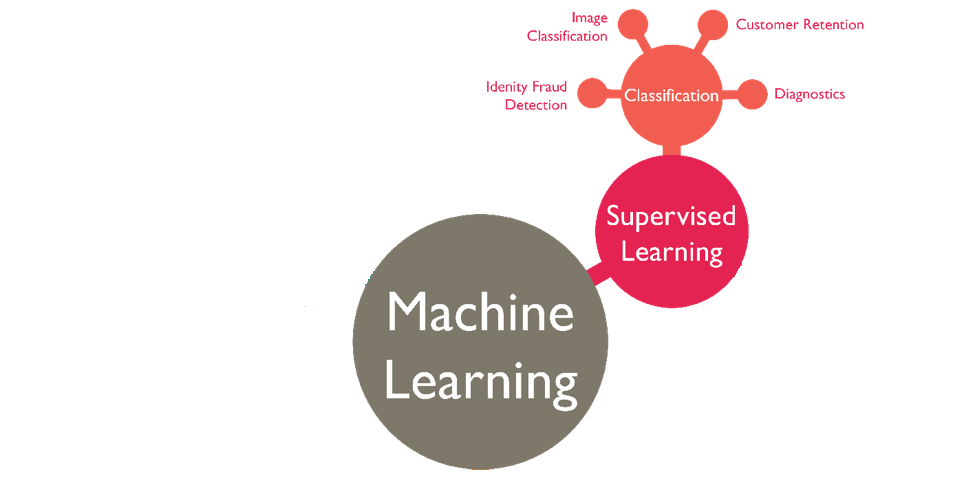
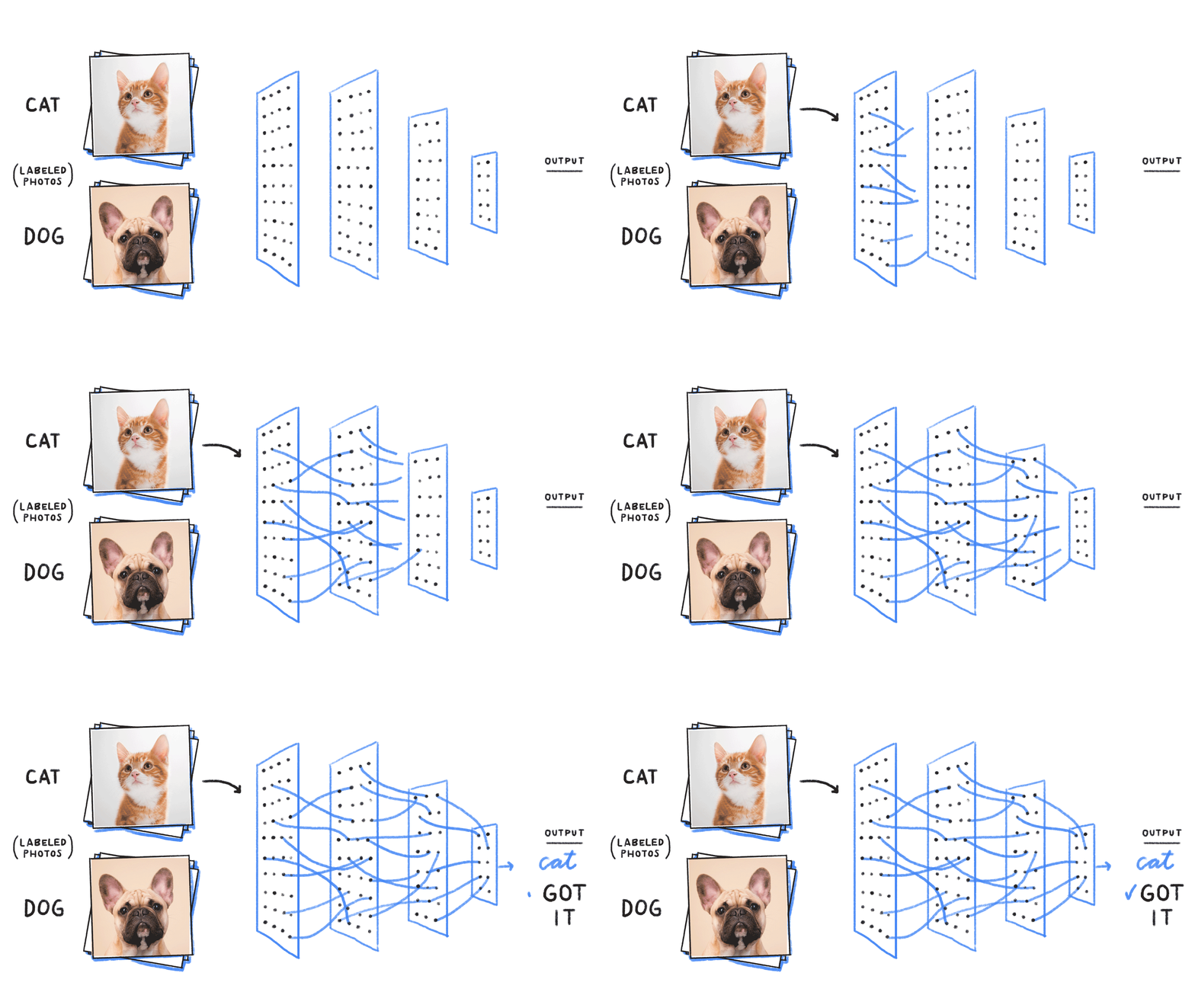
Supervised Learning: Classification – Image Credit
In a classification problem, we are trying to predict results in a discrete output. In other words, we are trying to map input variables into discrete categories.
Based on earlier predefined observations, estimate a classifier whose goal is to predict the category of a new observation (qualitative output).
Unseen data →Classifier → Class
Examples:
- Medical diagnosis: Sick and Not Sick.
- Animal recognition: Dog, Cat, Horse.
- E-mail spam filtering.
- Given a patient with a tumor, we have to predict whether the tumor is malignant or benign.
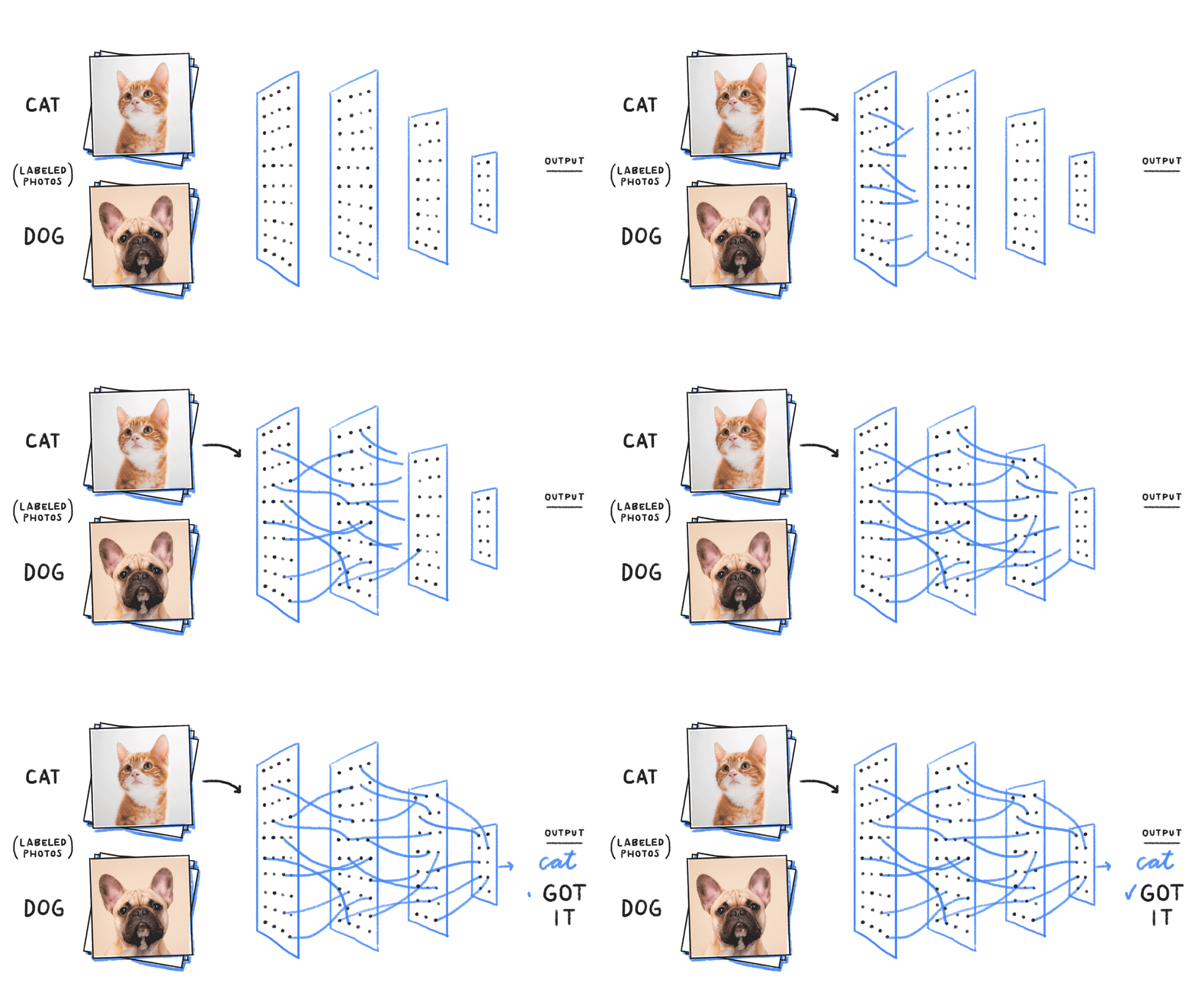
An animation showing a classification algorithm predicting animal given its image – Image credit
1.2 — Regression
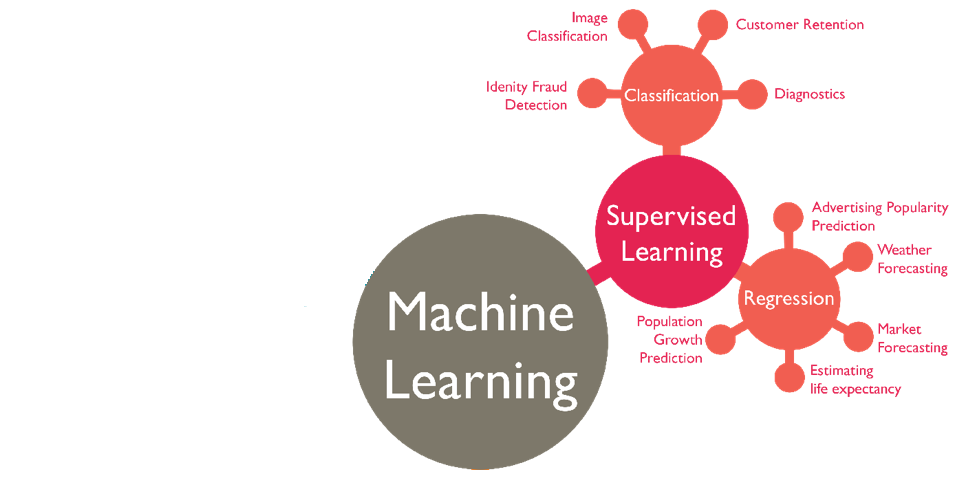
Supervised Learning: Regression – Image Credit
In a regression problem, we are instead trying to predict results within a continuous output, meaning that we are trying to map input variables to some continuous function.
Based on the previous input-output observations, estimate a regression function whose purpose is to try to estimate an actual value not just a class (Quantitative/Continuous Output).
Predictors → Regression Function → Response
Examples:
- Given height and weight, is the correlation linear, if so predict a height given weight.
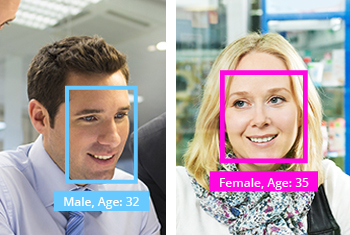
- Given a picture of a person, we have to predict their age based on the given picture.
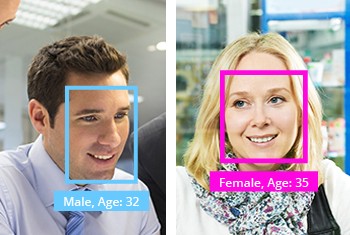
Regression is used to predict a person’s age, and classification is used to predict M or F – Image credit
2 — Unsupervised Learning
Labeling can be tedious (too long, too slow) and often done by humans. In case no real labels to compare, unsupervised learning allows us to approach problems with little or no idea what our results should look like.
We can derive structure from data where we don’t necessarily know the effect of the variables. We can derive this structure by clustering the data based on relationships among the variables in the data.
With unsupervised learning there is no feedback based on the prediction results.
2.1 — Clustering
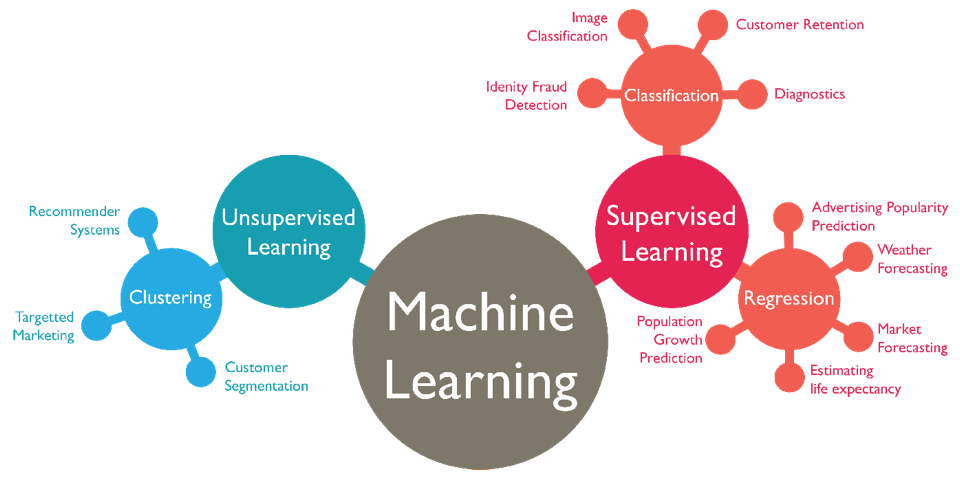
Unsupervised Learning: Clustering – Image Credit
Goal: Group objects in clusters, similar within-cluster, dissimilar between clusters. There are no labels, no right or wrong, and plenty of possible clusters.
Examples:
- Grouping similar items.
- Grouping news with Google News.
- Social network analysis.
- Market segmentation.

An animation showing a K-means (a clustering algorithm) grouping items automatically – Image Credit
2.2 — Dimensionality reduction
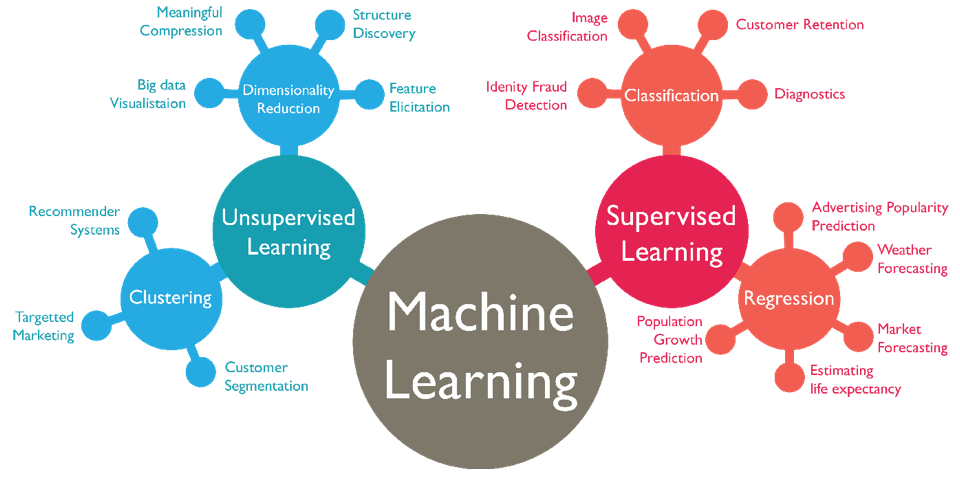
Unsupervised Learning: Dimensionality Reduction – Image Credit
Goal: Reduce dataset dimensions
Examples:
- Data compression.
- Big Data visualization (i.e from n-dimension to 2d/3d).
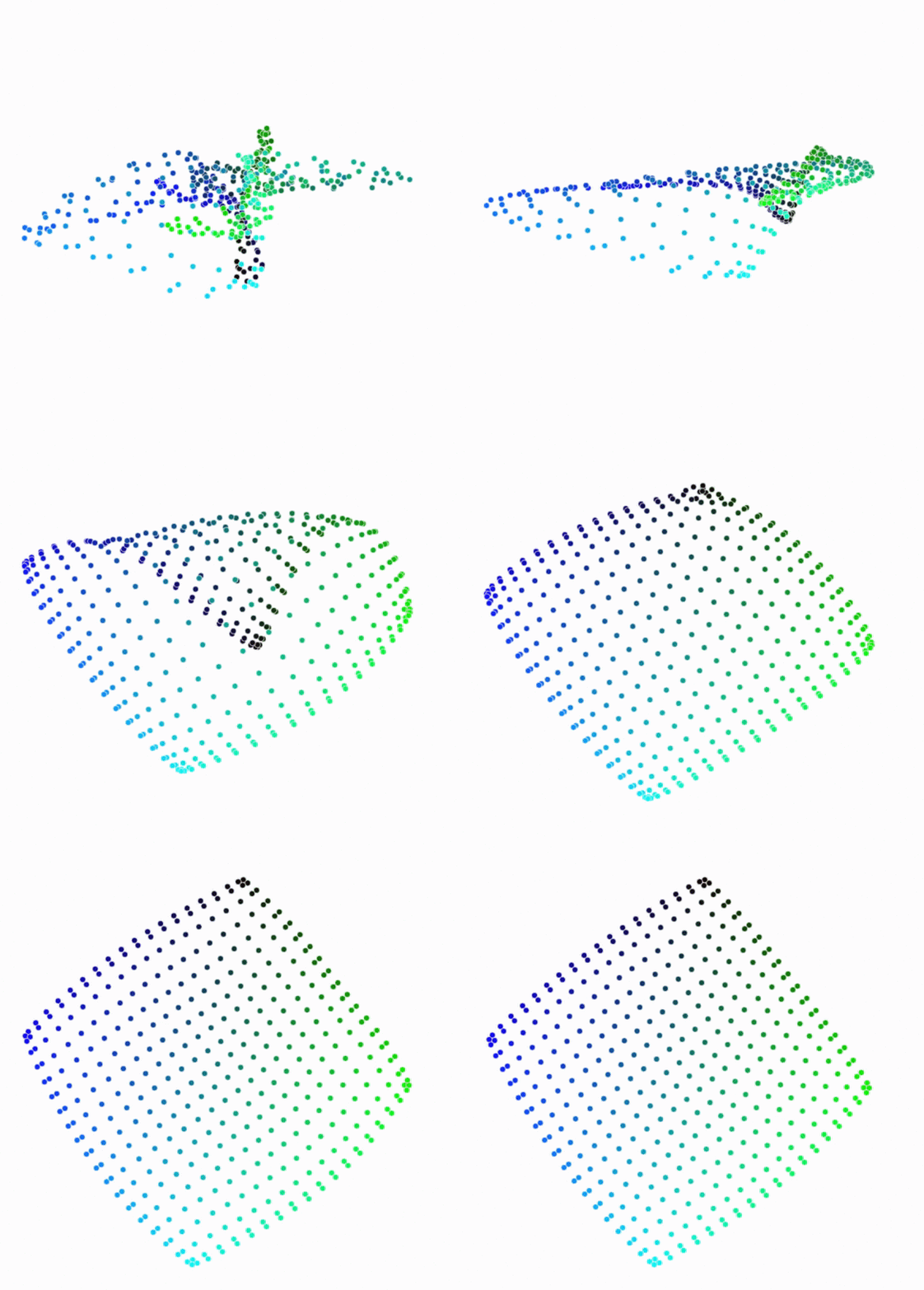
Animation showing dimensionality reduction using an algorithm called T-SNE – Image credit
2.3 — Anomaly detection
Goal: Identify rare items (outliers) that raise suspicions by differing significantly from the majority of the data.
Examples:
- Fraud detection.
- Anomalous behavior in computers of a data center detection.

An animation illustrating suspicious activities detection – Image Credit
2.4 — Recommender System
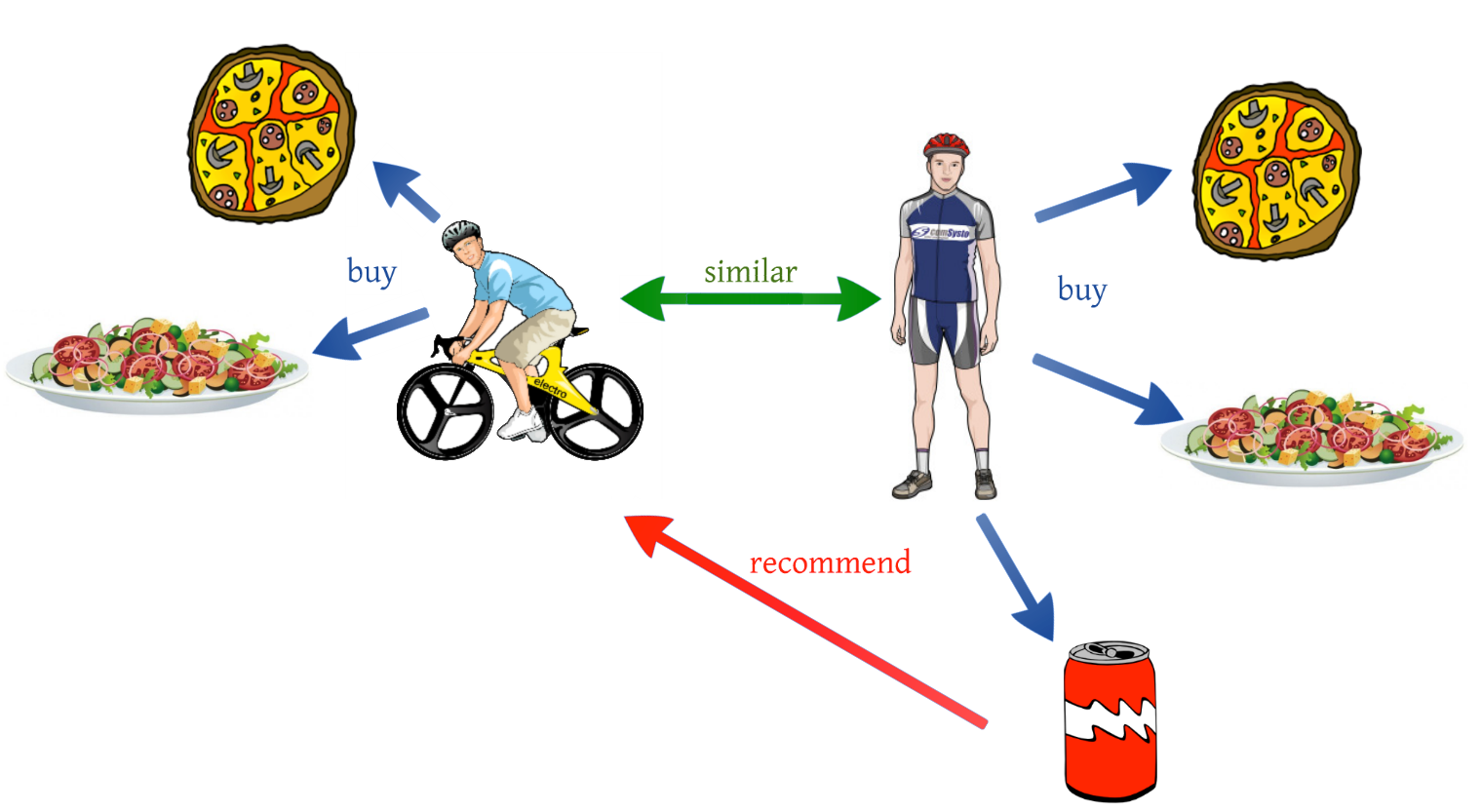
Goal: Predict the rating or preference a user would give to an item.
Examples:
- Recommending a movie to a user based on movies he has rated before.
- Recommending products for buyers.
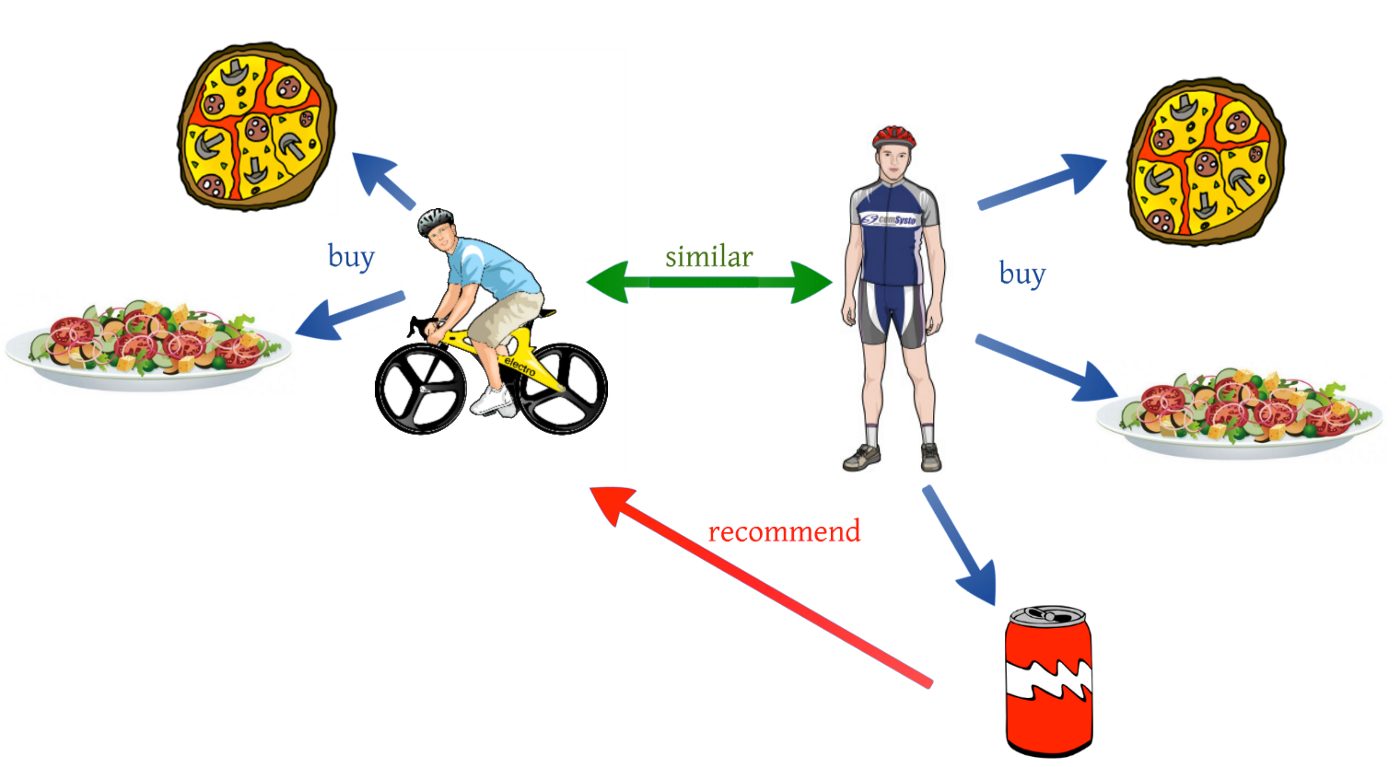
Recommending Soda for cyclist as he may probably be interested in comparing to similar profile – Image credit
3 — Semi-supervised Learning
In reality, things are not always black or white. When we got a lot of unlabeled observations and few labeled, a technique to use would be to group similar observations using clustering (unsupervised-learning) and then using clustering information and classes of labeled observations to assign a class to unlabeled observations (supervised-learning).
4 — Reinforcement learning
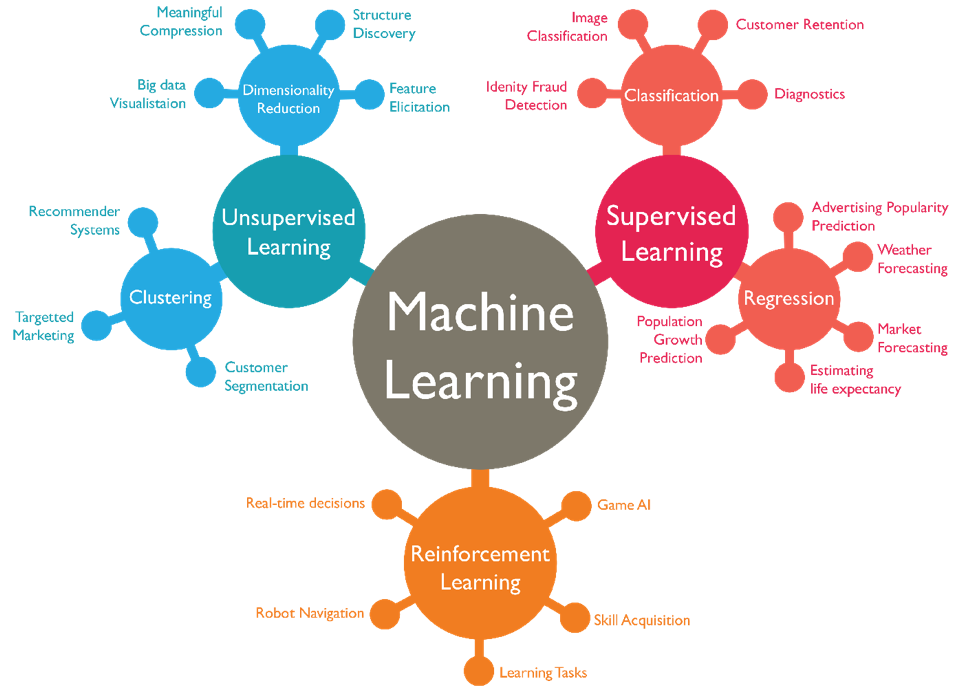
Reinforcement learning – Image Credit
Goal: Take action that maximizes some cumulative reward.
Examples:
- Real-time decisions making systems
- Game Bot/AI
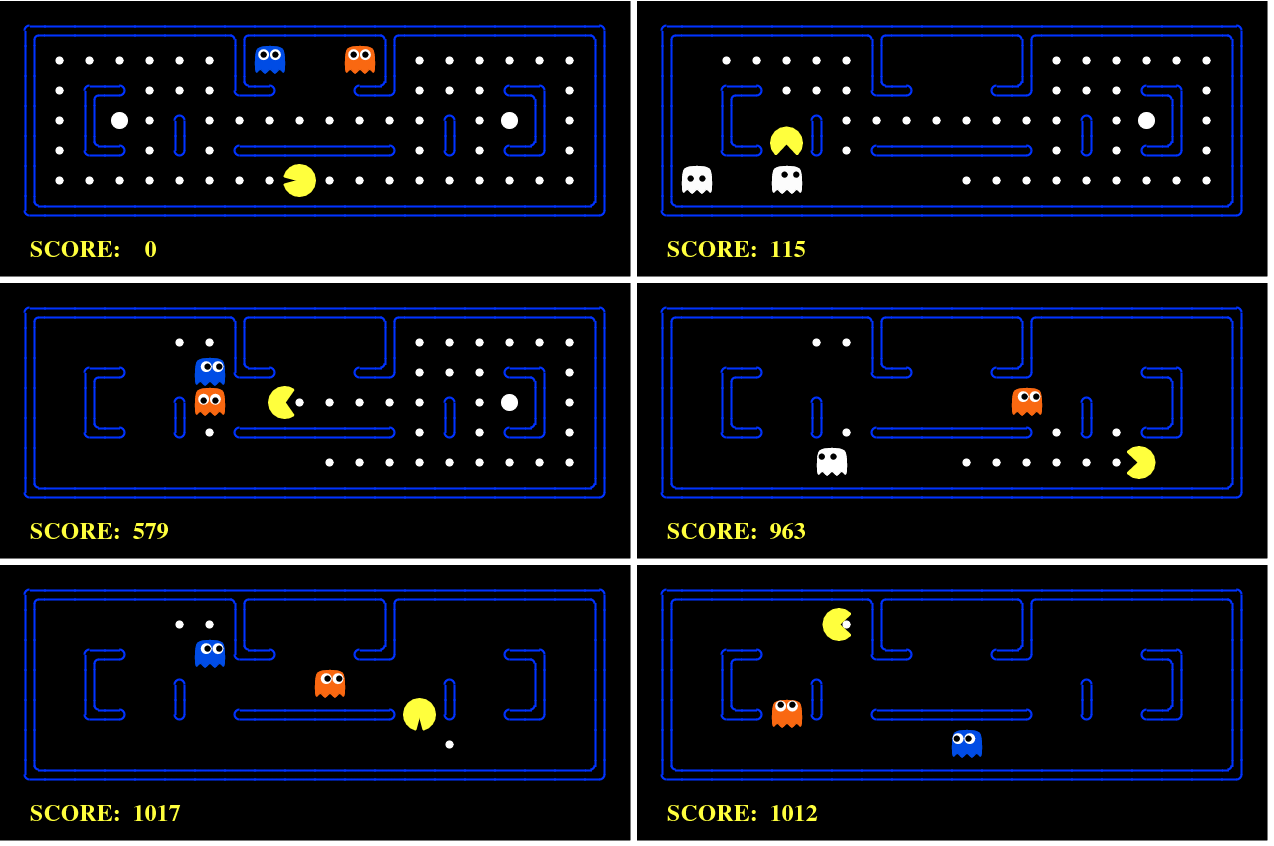
An agent trained to play Pac-Man using Deep Reinforcement Learning – Image credit
Great! Thank you for reading! Those were the major concepts of Machine Learning!
I hope I’ve managed to enlighten you a bit more about the subject by demystifying Machine Learning for you.
If you want to start building some of the most common Machine Learning Algorithms from scratch in Python, check my GitHub project for a vectorized implementation from scratch.
I daily share about Machine Learning on LinkedIn, so feel free to follow me ? https://www.linkedin.com/in/hamed-zitoun/
And if you need AI IS MY FRIEND (IA c’est mon dada) services for a Machine Learning development project, let’s get in contact!






0 responses on "What is Machine Learning?"